

Appendix carry (AIWB) puts the pistol inside the waistband between about 12 and 2 o’clock. It’s one of the most popular concealed-carry positions for a reason—and one of the most argued-over. The honest answer is that the position itself is not magic and not poison. Safety comes from a rigid holster that fully covers the trigger, and habits that never rush the gun back into the holster.
The Good
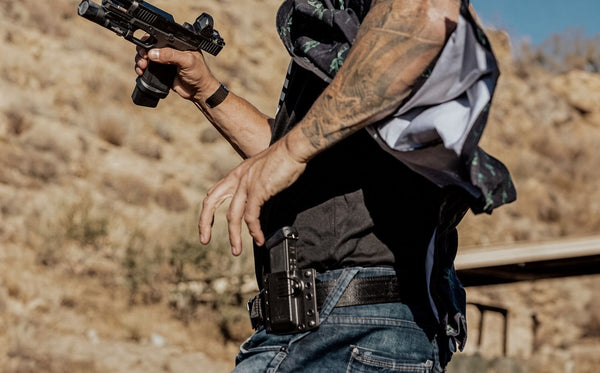
Access is the biggest win. From a standing or seated position the draw path is short and consistent. Many shooters pick up a couple of tenths of a second compared with strong-side hip carry, and those tenths matter when a threat is already close. Concealment is often better too. A well-designed IWB holster with a slight inward cant tucks the grip into the body so a light shirt can hide a compact or even a mid-size pistol. Retention against a grab from behind is strong because the gun sits in front of the body where you can protect it with both hands.

Comfort is more individual than people admit. With the right ride height, a modest wedge, and pants that aren’t cinched to the last hole, a lot of people sit, drive, and bend without the holster digging in. The holster has to stay open after the draw so you can reholster one-handed without fishing for the mouth.
The Bad
The muzzle points toward the groin and femoral artery while the gun is holstered and especially while it is going back in. A negligent discharge there is far more serious than one that tracks down the outside of the thigh. That is the legitimate objection, and it should not be waved away.
Most of those discharges happen during reholstering, not while the gun is sitting still. A collapsed soft holster, a shirt tail or drawstring in the mouth, a finger that sneaks onto the trigger, or a rushed stab at the holster can all put pressure on the trigger. Cheap nylon or floppy leather has no place here. The holster must stay rigid and keep the trigger fully enclosed.
Body type and clothing matter. A very slim frame or a large midsection can make the same holster feel completely different. Sitting for long stretches can still be uncomfortable even with a good setup. Some ranges and instructors ban AIWB in classes because students of mixed skill will perform hundreds of draws and reholsters in a weekend.

What Actually Makes It Safe
A purpose-built IWB holster that covers the entire trigger guard, holds its shape, and gives an audible or tactile click when the gun is seated. Adjustable ride height and cant let you tune the muzzle angle. Then the habits: never hurry the reholster. Clear the garment completely. Look at the holster. Keep the finger straight on the frame. Tilt the hips slightly so the muzzle tracks toward the ground rather than into the pelvis. If anything feels wrong, stop and start over.

Modern striker-fired pistols do not fire unless the trigger is pulled. The holster’s job is to make sure nothing can pull that trigger while the gun is on the body.
Appendix carry is safe when the equipment and the person using it treat the reholster as the highest-risk moment of the day. It is not safe with a floppy pouch, a sloppy draw stroke, or the idea that speed back into the holster is a virtue. Try it with an unloaded gun first. Adjust the holster. Practice the slow reholster until it is automatic. If the position still feels wrong after that, carry somewhere else. The goal is a gun you will actually wear every day and handle without cutting corners.
Comments