Rehearse biting your tongue 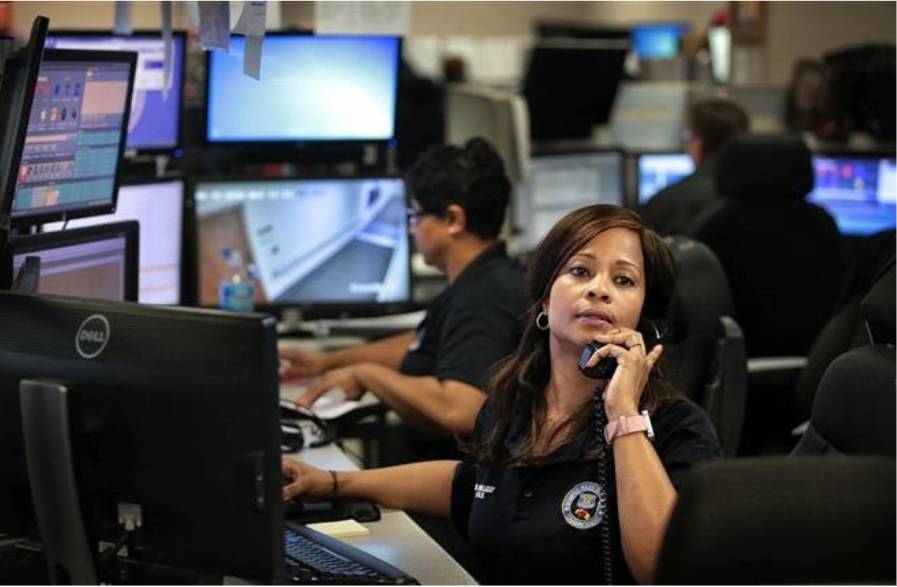
The dispatcher’s job is to get as much information for responding officers/EMTs as possible. And they’re trained to ask questions in a way that invites you to spill as much information as possible. But don’t.
Is it weird or impolite not to answer questions? Not in this case. Where post-incident communications are concerned, civilians are held to a tougher standard than police, but without the practice or the training on what to expect. Dispatchers and first responders protect the community; you’ve got to protect you in this case.
Once you’ve communicated the important facts about location, the name of the crime that is taking or took place, and sending help, lay the phone down or pocket it. It’s still connected to 911. You don’t need the distraction of a phone and it’s possible that this recorded line will pick up the sounds of any subsequent attack.
Adrenaline does funny things to the human brain, and whether you feel it or not, you’ll surely be under its influence during this phone call. Adrenaline, not to mention the emotional excitement of having your life threatened, makes human beings want to talk! Psychologists call this talk “excited utterances.” Expect that it’s going to take some self-restraint to not talk more to the dispatcher, nor to anyone in the surrounding area unless they’re in imminent danger.
The things we say in the moments following an incident can be more reflective of our immediate perception of the incident, which may not be accurate during an adrenaline rush and may change after a couple sleep cycles. According to Andrew Branca, a Colorado attorney who specializes in self-defense cases, many good-hearted people may leave out important details they’re completely aware of in those high-pressure moments, in an attempt to separate themselves from what would otherwise be considered a socially unacceptable action—like shooting someone.
In court testimony. Police are exempt from inclusion of excited utterances during and following an incident. You, on the other hand, are not! And yet they get a lot more practice than the average civilian in dealing with violent people and events. It’s not fair, but that’s how it is.
Know—and believe in your heart--that what feels good or right to say to that dispatcher is probably the exact thing that could come back as an inconsistency or even have damning influence on your case. It doesn’t feel good to put down the phone and regain your situational awareness. But that’s exactly what you should do.


Comments (1)
Thank you for posting emails like these. I hope I never have to pull a gun while I’m carrying but emails like these are very informative and helpful for us “good-hearted” people out here. Have a terrific holidays and keep safe.