

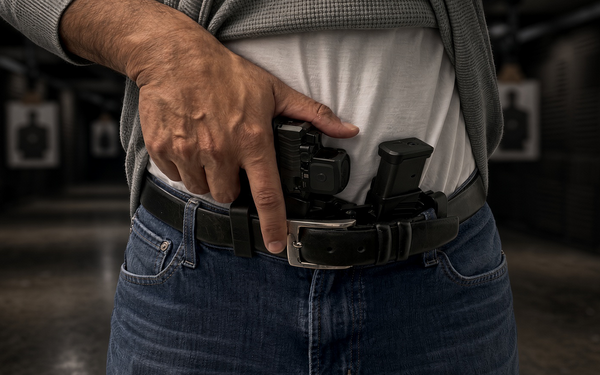
Appendix inside-the-waistband (AIWB) carry positions a handgun at the front of the waistband, roughly between the 12 and 2 o’clock positions. It has grown popular for everyday carry (EDC) because of its speed, concealment advantages, and retention benefits. The central question remains: Is it safe?
The short answer is yes—when practiced correctly with quality gear and disciplined habits. It is not inherently more dangerous than strong-side or other carry methods, but the consequences of a negligent discharge are more severe due to the muzzle’s orientation toward the groin, femoral artery, and reproductive organs.
The Core Safety Concerns
Critics correctly note that the muzzle points toward vulnerable anatomy while the gun is holstered. A negligent discharge during the draw or, more commonly, while reholstering could sever the femoral artery (potentially fatal within minutes without rapid intervention) or cause catastrophic injury to the pelvis or genitals.
This risk is real. Most documented negligent discharges with AIWB occur during reholstering when clothing, a finger, drawstring, or debris enters the trigger guard. Striker-fired pistols without a manual safety amplify the hazard if the holster fails to fully protect the trigger.

However, the same fundamental firearm safety rules apply to every carry position: keep the finger off the trigger until ready to fire, never point the muzzle at anything you are not willing to destroy (or accept the risk of), and ensure the gun is in a proper holster. Guns do not “just go off” when secured in a rigid, well-designed holster that completely covers the trigger guard. The danger arises almost exclusively during administrative handling—drawing and especially reholstering.
Many experienced carriers and instructors argue that AIWB can actually be safer for reholstering because the holster mouth is visible and accessible. You can look directly at the process, clear clothing with the support hand, and use a deliberate pelvic tilt to create space. Strong-side carry often requires more awkward angles where the muzzle may still point toward the body without the same visual confirmation.
Anecdotally, negligent discharges happen across all carry methods. The difference with appendix is that the margin for error is smaller and the anatomical stakes are higher.

Why Many Choose Appendix for EDC
Despite the debate, AIWB offers practical advantages that support consistent everyday carry:
- Speed: The gun sits near the natural hand position. Timed draws from concealment frequently show AIWB 0.15–0.25 seconds faster to first shot than strong-side IWB.
- Concealment: The gun rides in the flattest part of many body types. A simple untucked shirt often hides it better than a hip position that prints when turning.
- Retention: The firearm is in front of the body, where it is easier to protect against a grab. Natural startle responses (bending forward, tucking elbows) further secure it.
- Access while seated: Vehicle carry and seated draws are often easier than reaching behind the hip.
These benefits only matter if the carrier can maintain safety under real-world conditions—fatigue, distraction, clothing layers, and stress.

Making Appendix Carry Safe
Safety is not automatic. It requires deliberate choices:
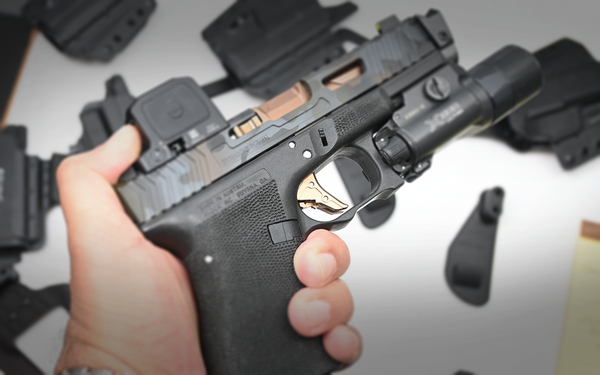
- Quality holster: Use a rigid AIWB-specific holster with full trigger-guard coverage, adjustable retention, and preferably a claw or wedge for better concealment and stability. Soft or poorly fitted holsters increase risk.
- Proper belt: A stiff gun belt prevents the holster from shifting or collapsing.
- Technique: Never rush reholstering. Clear the cover garment completely, confirm the holster is empty of debris, keep the finger indexed high on the frame, and insert the gun slowly while looking. Some instructors teach a slight hip thrust to angle the muzzle safely.
- Training: Dry-fire and live-fire practice under instruction is essential. New carriers should master fundamentals with a strong-side setup first before transitioning.
- Gun selection: Many prefer models with a manual safety or those that lend themselves to AIWB ergonomics, though modern striker-fired pistols work fine with the right holster.
Body type matters. Slimmer builds often find AIWB more comfortable; larger midsections may require adjustments in ride height, cant, or clothing. Comfort is critical—if the setup is miserable, consistency suffers and safety habits erode.

The Bottom Line
Appendix carry is safe for everyday carry when the user treats it with the seriousness it demands. It is not a casual or beginner-friendly position. The higher potential consequences of a mistake mean there is less room for complacency. Quality equipment, rigorous training, and unwavering trigger discipline reduce the risk to levels comparable to other proven methods.
For many, the speed, concealment, and retention advantages outweigh the manageable risks, making AIWB an excellent EDC choice. For others, strong-side or alternative positions feel more forgiving and remain perfectly valid. The best carry method is the one you will use consistently, safely, and with full awareness of its demands.
Carry smart, train often, and never compromise on the fundamentals.
Comments (2)
This is great material to read . This is how I carry & everything said here is exactly true .
This is a wonderfully in-depth article. It is evident that it was meticulously prepared and skillfully written.